Decades of market experience, technical insight and transaction knowledge brought to every acquisition.

Experience the Finest Yachts


Buying With Yachtsman
Dedicated, discreet, determined.

Buying a yacht, whether as a first-time buyer or a seasoned owner, is likely to be amongst the most significant investments you make. We aim to make it the most enjoyable. We begin by building an intricate understanding of your requirements, before employing our decades of expertise and vast network to source candidates, some of which may be publicly available for sale, and often those which are not. A combination of our technical expertise, forensic attention to detail, and deep market knowledge of achieved sales prices ensures that risks are correctly managed and mitigated, from inspection through to completion. Our commitment extends far beyond delivery. From crewing and managing your yacht, through to any refit requirements and ongoing maintenance, we are with you for the long term. For a one-to-one discussion, and a list of appropriate candidates, get in touch.
Buying a yacht, whether as a first-time buyer or a seasoned owner, is likely to be amongst the most significant investments you make. We aim to make it the most enjoyable. We begin by building an intricate understanding of your requirements, before employing our decades of expertise and vast network to source candidates, some of which may be publicly available for sale, and often those which are not. A combination of our technical expertise, forensic attention to detail, and deep market knowledge of achieved sales prices ensures that risks are correctly managed and mitigated, from inspection through to completion. Our commitment extends far beyond delivery. From crewing and managing your yacht, through to any refit requirements and ongoing maintenance, we are with you for the long term. For a one-to-one discussion, and a list of appropriate candidates, get in touch.

REQUEST A CALL BACK

BuYING GUIDE
01
Try before you buy
The diversity of the superyacht market can be overwhelming. Considerations such as, where and how am I intending to cruise, how many people do I want onboard, how fast and/or economical do I want to be, do I intend to be onboard for extended spells, will I be working onboard, what features are important to me, will I be spending more time indoors or outdoors; all these factors, and more, have a major bearing on the suitability of any given yacht for your lifestyle.
We are able to guide with precision based on your preferences, but nothing will substitute spending a week or longer on a yacht that fits your initial brief. This is without question the best way to determine which factors are most important to you, and likely to provide increased clarity as to where and how you tend to spend most of your time, thus influencing layout considerations, amongst other variables.
One of the benefits of the yacht market is that plenty of the yachts for charter are also directly available for sale.
02
Motor vs Sail
The first and most fundamental decision to make. If you are here and reading, you’ve likely already made it. The difference in experience offered by the two is so marked, and tends to elicit such strong views withing the yachting world, it almost doesn’t do either yacht type justice to compare them side by side.
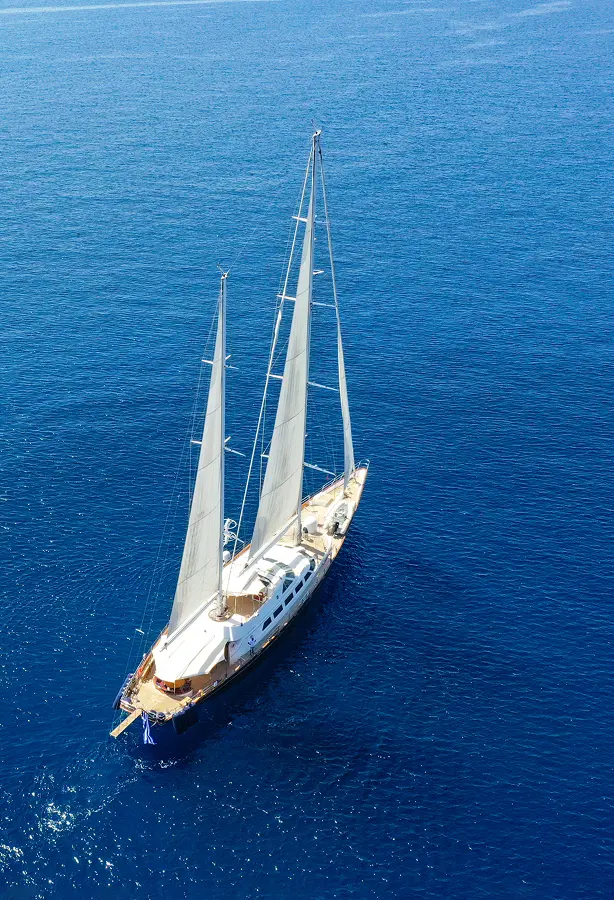
Sailing yachts allow for the ability to cruise without any engines running, solely powered by the wind. Aside from the serenity of doing so, this has astronomical effects on overall fuel consumption.
Higher performance sailing yachts also provide access to competing in some of the well-known and highly celebrated yachting regattas all over the world, along with the fabulous social scene that goes with them.
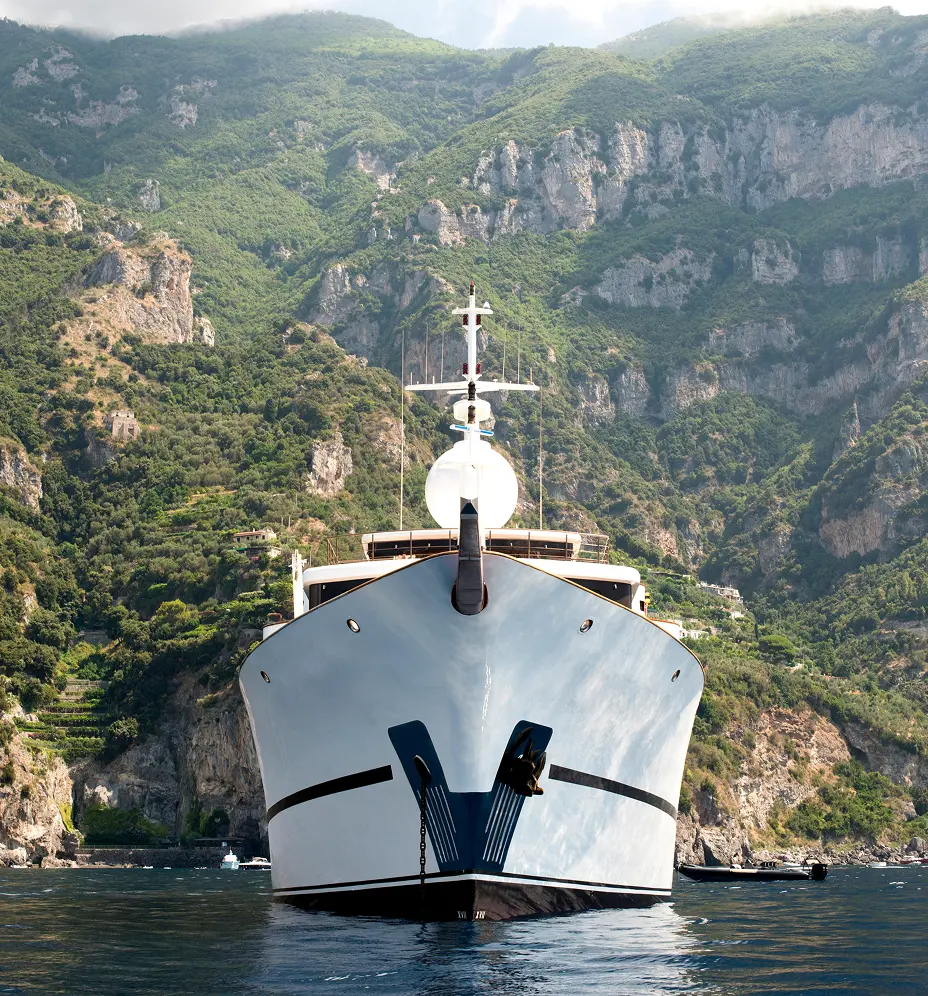
Motor yachts typically offer greater interior and exterior volume, higher cruising speeds, more direct passage-making and, in many cases, greater flexibility in layout and onboard amenities.
03
The Hull
As much as anything else, the hull of your yacht will define its utility and the enjoyment you derive from it.
Planing yachts are optimised for speed and agility, making them particularly well suited to shorter passages and day cruising. Their shallower draft can provide access to waters and berths unavailable to larger displacement yachts. The trade-off is typically lower fuel efficiency at slower speeds, less interior volume and a less comfortable ride in heavier seas.
Displacement yachts feature fuller hull forms that sit deeper in the water and are designed for efficient cruising at lower speeds. They generally offer a smoother, more stable ride and significantly greater interior volume, making them particularly well suited to extended cruising and long-range passages. Their deeper draft can, however, restrict access to shallower waters and certain berthing locations.
Semi-displacement yachts sit somewhere between the two, offering higher speeds than a full displacement yacht while retaining greater comfort and volume than a typical planing yacht.
For true go-anywhere capability, an Ice Class hull may be required. Reinforced for navigation in icy waters and extreme conditions, these yachts sacrifice some speed and efficiency in return for significantly greater strength, resilience and operational capability.
04
Performance and Cruising Capabilities
Whilst the hull of your yacht will determine its utility, range is the next key consideration. Transatlantic being a desirable trait for many.
Beyond the concern of whether you wish to summer in the Med and winter in the Caribbean, is how long you want to spend onboard for any given period and what level of autonomy you desire.
If the goal is circumnavigating the globe for months on end, then this is, of course, possible on yachts of all shapes and sizes, but it will be an Explorer yacht that will allow you to do so with the most comfort and safety. Some will be built with Ice Class hulls, but all will be equipped with significantly larger fuel tanks and vast storage facilities, providing for longer periods of self-sufficiency.
05
Size
Matters. Gross Tonnage (GT), or put another way, interior volume, is the crucial metric in determining the space you will have onboard. Whilst length is important, and affects the overall experience, in addition to your marina access, it is GT that will determine the possibilities for layout and amenities.
Over and above 499 GT, yachts are subject to significantly more stringent regulations and requirements than those below the threshold. These come with cost and operational implications, in the form of more crew, certifications and inspections, and often higher insurance premiums. These are all factors in which we are highly versed and can guide accurately.
06
Yacht Builders
Amongst the circa 150 shipyards worldwide specialising in yachts over 30 metres, their offerings can broadly be divided into custom, semi-custom and production series.
Pedigree matters. The quality of a yacht’s build has direct implications for reliability, maintenance and insurance costs, and ultimately resale value.
The Dutch and German yards have a well-earned reputation for producing some of the finest fully custom and semi-custom yachts over 50 metres. Lürssen, Feadship, Abeking & Rasmussen, Amels/Damen, Heesen, Oceanco, Royal Huisman and Nobiskrug are amongst the names that command a justifiable premium in both the new-build and second-hand markets.
Italy offers perhaps the broadest spectrum of builders. Benetti, CRN, Codecasa, Baglietto, Rossinavi, Tankoa, Fincantieri and Mariotti have established reputations in the larger custom and semi-custom market, while Sanlorenzo, Custom Line, Ferretti and Azimut are particularly strong in production and semi-custom yachts.
Italy also dominates much of the high-performance and open-yacht sector, with Pershing, Riva, Mangusta and AB Yachts amongst the leading names.
The UK remains an important centre of yacht building, particularly in the production and semi-custom market, with Sunseeker and Princess enjoying established international followings.
Turkey has developed considerably as a yacht-building centre. Turquoise, Bilgin, Mengi Yay and AKYACHT are increasingly credible options for buyers seeking semi-custom and fully custom yachts, often at comparatively attractive price points.
For sailing yachts, specialist yards including Royal Huisman, Perini Navi, Vitters, Baltic Yachts, Nautor Swan and Southern Wind have built some of the most important performance and cruising yachts of recent decades, combining increasingly sophisticated engineering with highly individual design.
The explorer-yacht sector has also produced a number of increasingly prominent builders, with Cantiere delle Marche in particular establishing a strong reputation for capable long-range yachts.
Chartering yachts and visiting boat shows remain some of the best ways to understand the differences in build quality, engineering, design language and layouts favoured by individual yards, and how closely these align with your own priorities.
07
Design & Layout
Beauty is in the eye of the beholder.
Yacht layouts and interiors are as varied and individual as their owners. Having a clear sense of your own preferences goes a long way towards narrowing the field.
Production yachts are, by design, created to appeal to a broader audience. This is not necessarily a disadvantage. Decades of experience have gone into refining layouts and making efficient use of space around the way most owners, families and guests actually spend their time onboard. Much the same applies to the semi-custom market.
Fully custom yachts are different. They are designed around the priorities of a specific owner, which can result in layouts and features that you either find exceptional and essential, or completely unnecessary.
Cabin configuration is often the starting point. How many cabins do you need, how should they be arranged, where should they sit within the yacht, and how much flexibility is required? Some yachts feature relatively similar guest cabins throughout, while others offer full-beam master suites with private balconies or dedicate an entire deck to the owner. VIP cabins may divide into two, while staff or security accommodation may sit close to the principal suite.
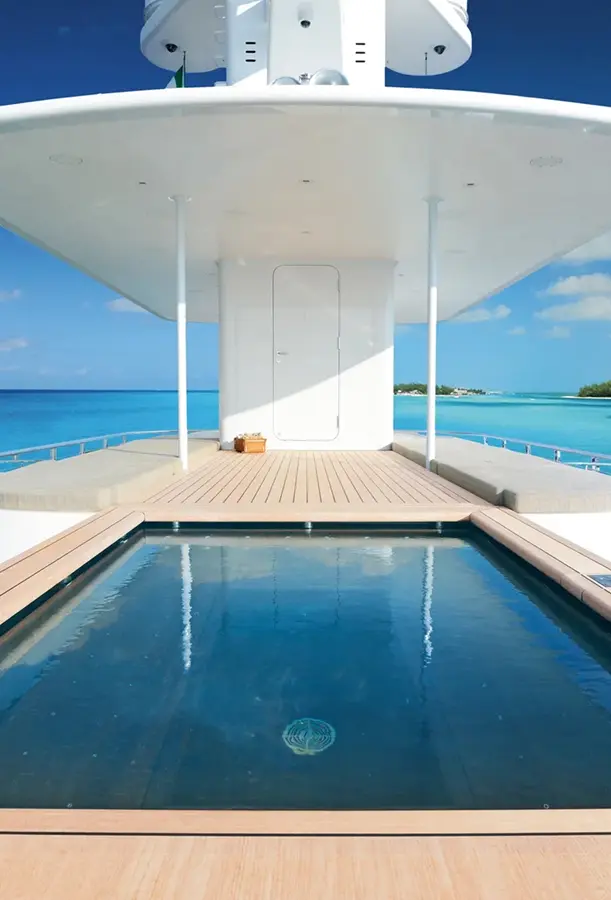
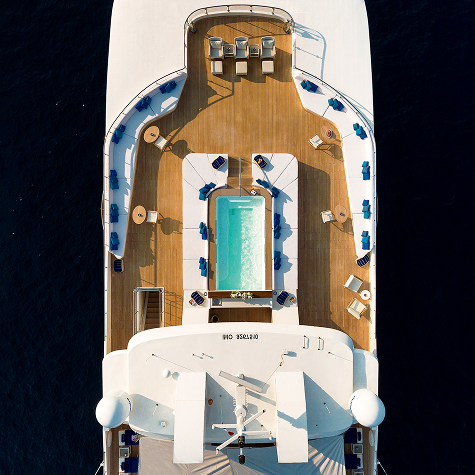
Then come the wider lifestyle considerations. Do you need a gym, cinema, dedicated office, sauna, beach club, swimming pool, helipad or lift? Do you require particularly wide decks or wheelchair accessibility? Which of these are priorities, and which are simply desirable?
Some yachts prioritise exterior living, with expansive deck areas, alfresco dining and easy access to the water. Others sacrifice some of that space in favour of greater interior volume. As yacht size increases, it becomes increasingly possible to achieve both.
Interior styling matters, but it is also one of the easier elements to change. Incoming owners frequently alter furnishings, finishes and décor to suit their own taste. Structural layout is far less forgiving.
For that reason, it is generally better to choose a yacht whose underlying arrangement already works for you rather than trying to force a fundamentally unsuitable layout into something it was never designed to be.
08
Features
As a general rule, the newer the yacht, the more likely it is to incorporate the latest technology and design thinking.
Some advances are immediately visible from photographs and listings. Expansive glazing, floor-to-ceiling windows, larger beach clubs, folding balconies and more sophisticated exterior spaces have all become increasingly common on modern yachts.
Others can be identified from the specification sheet. Zero-speed stabilisers, upgraded HVAC, advanced navigation systems, connectivity and power-management systems are examples.
There are also features whose impact is much harder to judge on paper. Improvements in insulation, machinery isolation, vibration control and noise reduction can transform comfort onboard, but often require first-hand knowledge, inspection or sea trial to properly assess.
The difference is often most noticeable in the details: sleeping in near silence with the yacht underway, holding a conversation on deck without competing with machinery noise, or moving through interior spaces that remain cool, quiet and free from vibration.
We can advise on the latest innovations, explain which are likely to matter most to the way you intend to use the yacht, and identify what can realistically be retrofitted to an older vessel.
09
Efficiency & Sustainability
Some of the most meaningful recent advances in yacht design have focused on reducing fuel consumption, emissions and overall energy use.
Hybrid propulsion systems have become increasingly sophisticated, while fully electric solutions continue to develop, particularly at the smaller end of the market. More efficient hull forms, lighter materials and improved power-management systems can also materially reduce consumption.
Modern yachts may incorporate advanced sewage-treatment systems, waste-management and recycling facilities, battery banks, solar generation and shore-power capability, all of which can reduce environmental impact during operation.
There are also less obvious gains to be made through equipment selection, efficient HVAC systems, responsible sourcing and sustainable decking materials.
Many of these improvements have the added benefit of reducing running costs. When assessing a yacht, we can help distinguish between features that are genuinely useful and those that offer little more than a marketing label.
10
Running Costs
You are likely to have heard various rules of thumb for estimating annual yacht running costs as a percentage of purchase price. They can be useful as a very broad guide, but they are also capable of being wildly inaccurate.
The true cost of ownership depends on a wide range of variables: the yacht’s size, age and build quality, where and how extensively she is used, crew requirements, fuel consumption, berthing, insurance, maintenance schedules and anticipated refit or survey work.
Two yachts with a similar purchase price can therefore have very different annual operating costs.
For a realistic picture, the numbers need to be built around the individual yacht. We can prepare detailed operating budgets against specific candidates, allowing you to compare expected ownership costs before making a decision.
11
Charter Potential
Chartering is one of the most effective ways to offset the running costs of yacht ownership.
It can also help keep the crew engaged, ensure the yacht remains in consistently high condition, and build a strong charter reputation over time.
This should not necessarily dictate which yacht you buy. The qualities that make a yacht attractive to you — condition, layout, design and onboard experience — are often the same qualities that appeal to charter guests.
The main consideration is whether the yacht already complies, or can be brought into compliance, with the regulatory requirements for commercial charter.
Yachtsman’s charter management team has a proven track record of maximising charter performance, advising on everything from crew profile, toys and equipment to seasonal positioning, pricing and presentation.
Visit our Charter Management page for more detail.
12
Sourcing
The fun part.
Following our initial discussions, having identified precisely what you are looking for and what is most important to you, we go to work.
Using our vast network built up over decades in the business, we will provide you with a shortlist of the best candidates. This may include some publicly listed yachts should they meet your requirements, as well as off-market opportunities well known to us privately.
We will then arrange for live inspections. In all cases, we will already have vetted and visited any given yacht in advance of insisting you join us for a viewing. Not just highly advisable, we would say it is a prerequisite, to see the vessel in the flesh before making any form of offer. It also tends to be an enjoyable and informative part of the process.
Should the pre-owned market be unable to deliver to your precise requirements, you may wish to consider the new build option. Visit our Build page for more information.
13
Negotiation and Completion
We’ve found the one. Time to submit an offer.
Backed by detailed knowledge of achieved sale prices and a close understanding of the market, we guide the negotiation with precision, helping you bid with confidence and a clear sense of value.
Once terms are agreed, a sale and purchase agreement is prepared. At this stage, we recommend appointing an independent maritime lawyer to protect your interests, and can introduce highly experienced professionals where required.
Once the agreement is signed and the deposit paid, the yacht proceeds to sea trial and survey. Depending on the size and complexity of the vessel, this can take one or more days and is carried out with an independent surveyor, supported by our technical team.
The aim is to confirm that the yacht presents and performs as expected, that engineering and onboard systems are operating correctly, and that there are no material defects or unexpected issues.
From there, we work alongside the seller, lawyers, surveyors and other advisers to resolve any outstanding matters and compile the documentation required for completion.
Closing day is the final step: documents are signed, funds are transferred, title passes, and the yacht is yours.
14
Refit
Just like any home, you will want to make it yours. The degrees to which you may want to chop, change and imprint can vary widely. You may have bought a yacht that is so in keeping with your own tastes, that all is left to do is to deliver some fresh linens and have some of your own artwork put up. It may be the case that the layout of the yacht is perfect, but the interiors need a full overhaul. Perhaps the exterior areas need some attention to bring them up to scratch.
Or it may well be the case that you have taken on a project, with a vision.
We have project managed with some of the top shipyards, naval architects and interior designers in the industry, and are able to deliver on time and within budget, whatever the scale and scope of works required.
Visit our Refit page for further information.
15
Yacht Management
There are a number of immediate matters that need to be attended to. Registering your vessel in an appropriate jurisdiction, securing a home berth, assembling your crew, and insuring your yacht. You are in good hands; the majority of this will have been deciphered and arranged for the moment you take ownership. Allow us to make this as seamless a process as possible.
Going forward, we are by your side and your first port of call for any operational concerns. From crew admin and payroll, technical management, accounting, insurance, through to regulatory compliance.
Visit our Operational Management page for further details on how we ensure your yacht ownership is nothing but smooth sailing.

FINANCE
We hold longstanding working relationships with a number of specialist third-party lenders who are able to assist in the financing of your acquisition.
For further details, and a personalised quote, please get in touch.
REQUEST A CALL BACK